On our 32S the living room sofa area butts up against our refrigerator cabinet on the street side (driver side). We have an original shelf that runs behind the sofa that is great for storing stuff….THAT IS, unless IT GOT SOAKED!
It had been over 4 weeks since any rain but when we got a recent good storm we could actually see beads of water running down the plastic welding tube that sits in the corner and knew we had an issue.
STEP 1: WHERE WAS THE LEAK COMING FROM?
FIRST Kevin checked the inside upper cabinet above the fridge, then inside the exterior fridge panel to access the rear of the refrigerator. Both were completely dry and showed no signs of any previous water stains or moisture.
NEXT, after the rain storm had passed, we put a paper towel on the behind the sofa shelf.
Process of Elimination!
Kevin stood on a ladder on the side of the Avion, and using a hose, he concentrated the direction of the water in section by section of the roof and curved side area bit by bit. BINGO! as soon as his hose spray hit the area of the plastic refrigerator roof vent Luise was inside to see the leak drip down.
SO NOW WE KNEW WHERE IT WAS COMING FROM!
Kevin removed the plastic (spray painted silver) from the roof. We had riveted it and applied Eternabond around the edges when, in 2023, he had used this vent space to run our rear backup camera coaxial wire and also our Weboost antenna wire to a power source behind our refrigerator. (Thats another blog post some day!) At the time we were leaving NYS completely and going full time in 4 days and did not have enough time to fully clean off all the very old mastic, butyl and other gunk previous owners had used u Der the plastic roof vent. It appeared to still be sealing ok and we had no leaks.

THE FIX IS NEXT!
3 years later, the original(?) Butyl tape between the plastic cover and the roof was dry, cracked and cakey and needed to be removed.
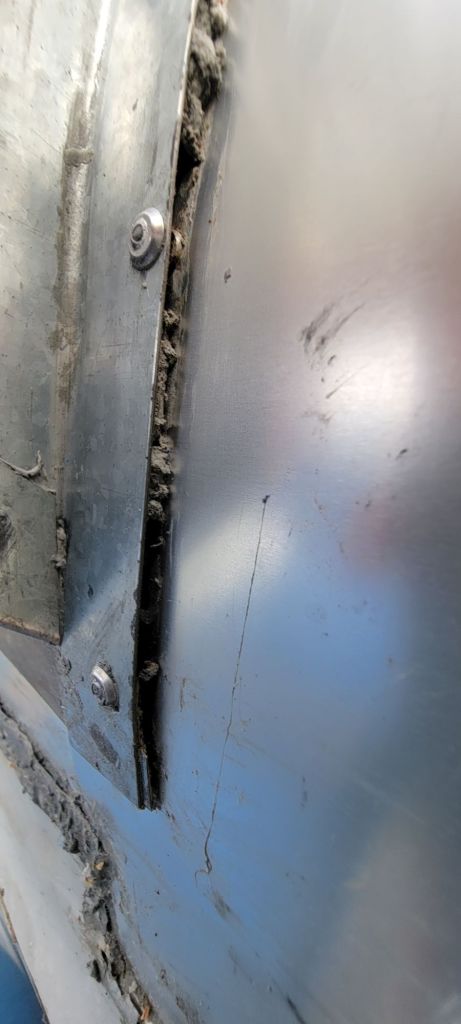

We surmised this, and some of the rivet holes were our new leak culprit.
Luise used our trusted Automotive Bone Tool (see our Resources page and its image in photo below) to remove the old butyl tape off the vent shroud and off the trailer anodize alluminum skin. (Note the small squares of Eternabond tape we put over every rooftop rivet besides taping the sems on roof)


See our BONUS VIDEO SHORT below!
Kevin meanwhile refilled all rivet holes with Captain Trolleys then after waiting dry time, filled the holes with clear Parbond in anticipation of re-riveting.
He also applied Eternabond this time, lapping the metal vent chimney itself to the vent opening in the roof. This creates an additional water barrier. Next was the reinstall of the plastic roof shroud that is visible from eye level. Again, whenever we rivet into the side or roof of our Avion we always fill the holes first with parbond (some references to this as “wet riveting”). Since our Avions have the rigid blown in foam insulation, the Parbond is only going to go in as deep as the rivet hole is.
Sorry, these photos may be a little hard to view. But hopefully, it all helps.
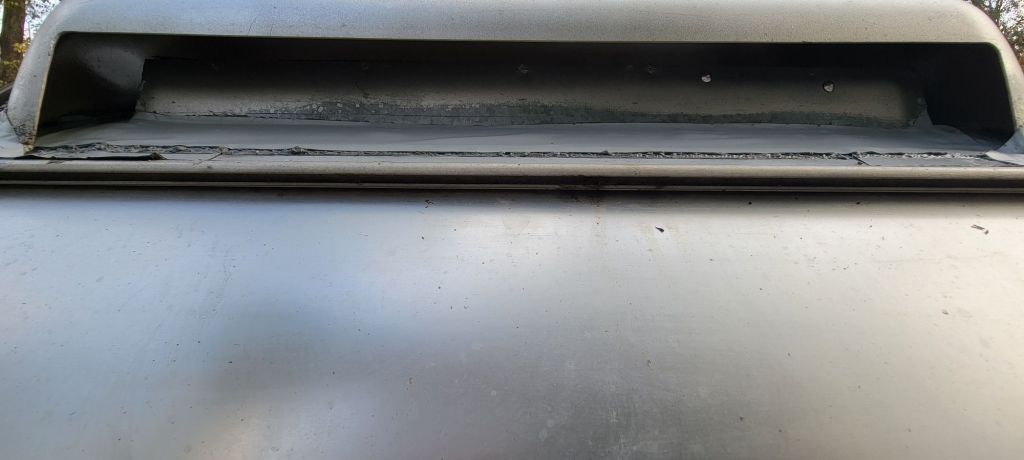
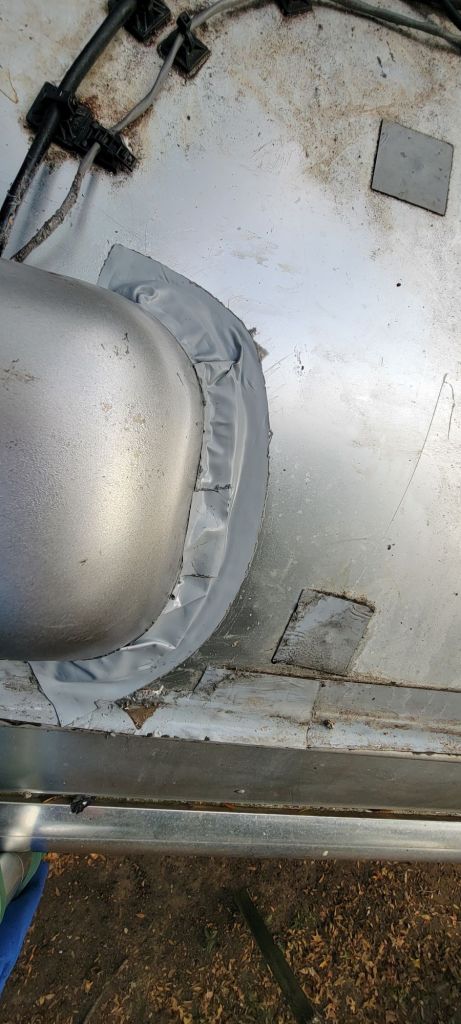
We figure this vent re-sealing will be good for another 8++ years at least.
https://youtube.com/shorts/ASaQ3YVSbmk?si=q0uJ92IAKbuRt9aE
Happy travels! Let us know if this has been helpful!
Kevin & Luise

 ThePewterPalace Our Love Affair with Avions
Leave a comment