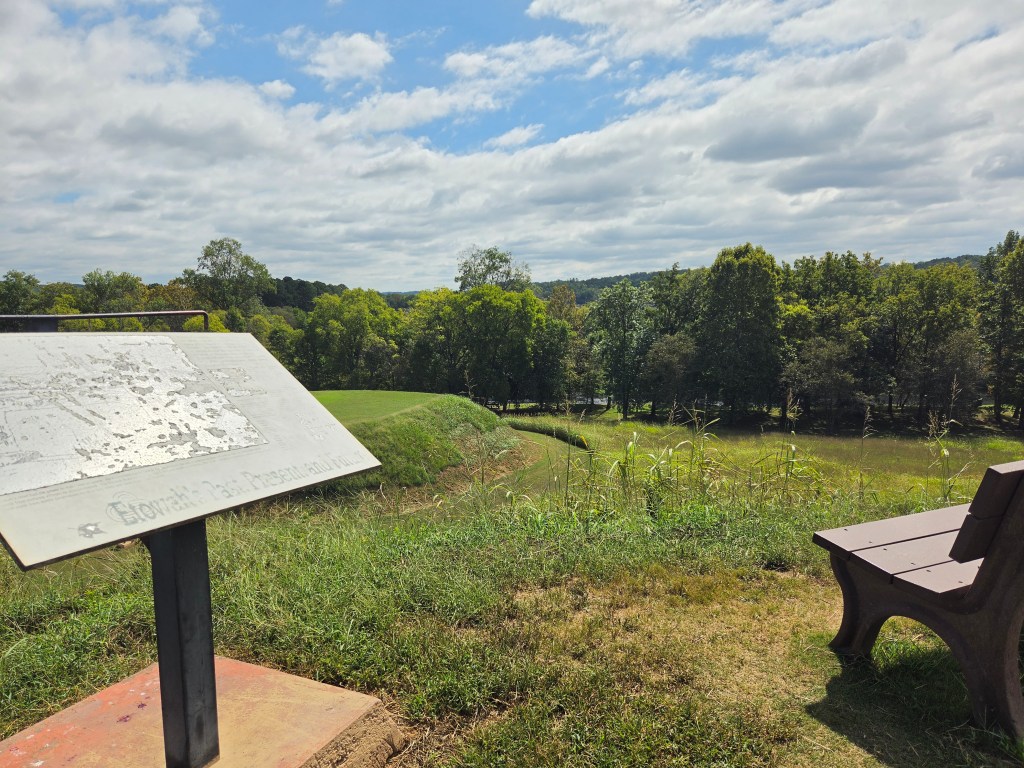
On a day trip to explore the area, wr left our COE Victoria CG and drove just 18 miles…but back in time to A.D. 1000!
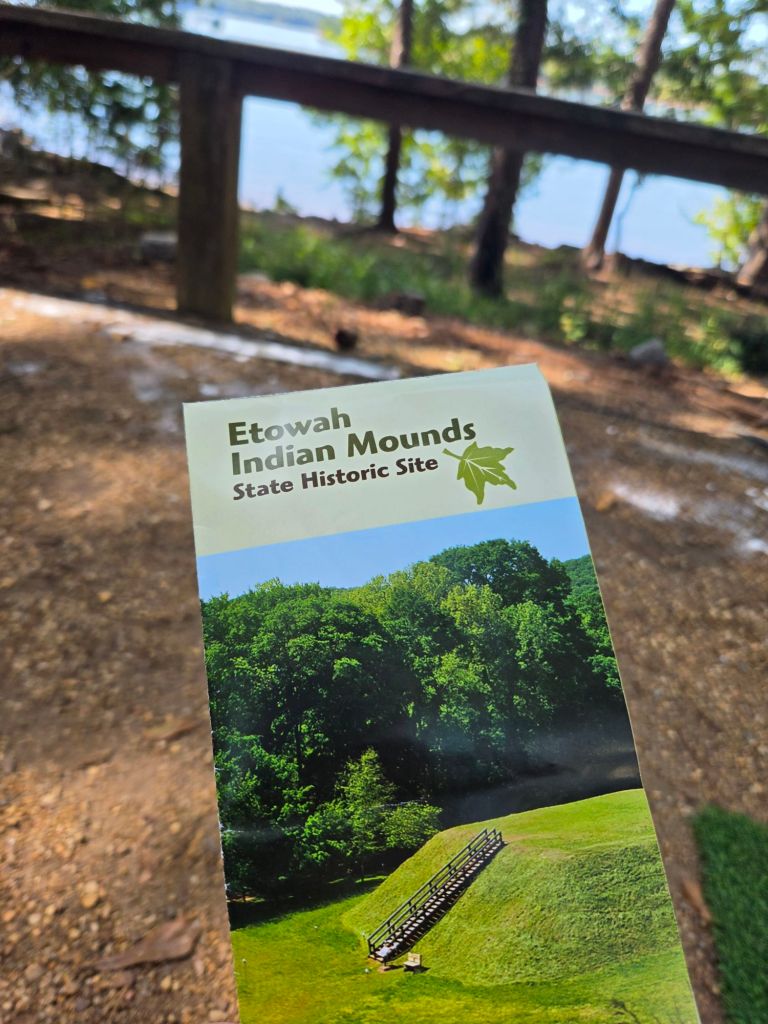
We visited and toured (and climbed!) The Etowah Indian Mounds. This is a GA state historic sites not far off I-75 and definitely worth your visit!
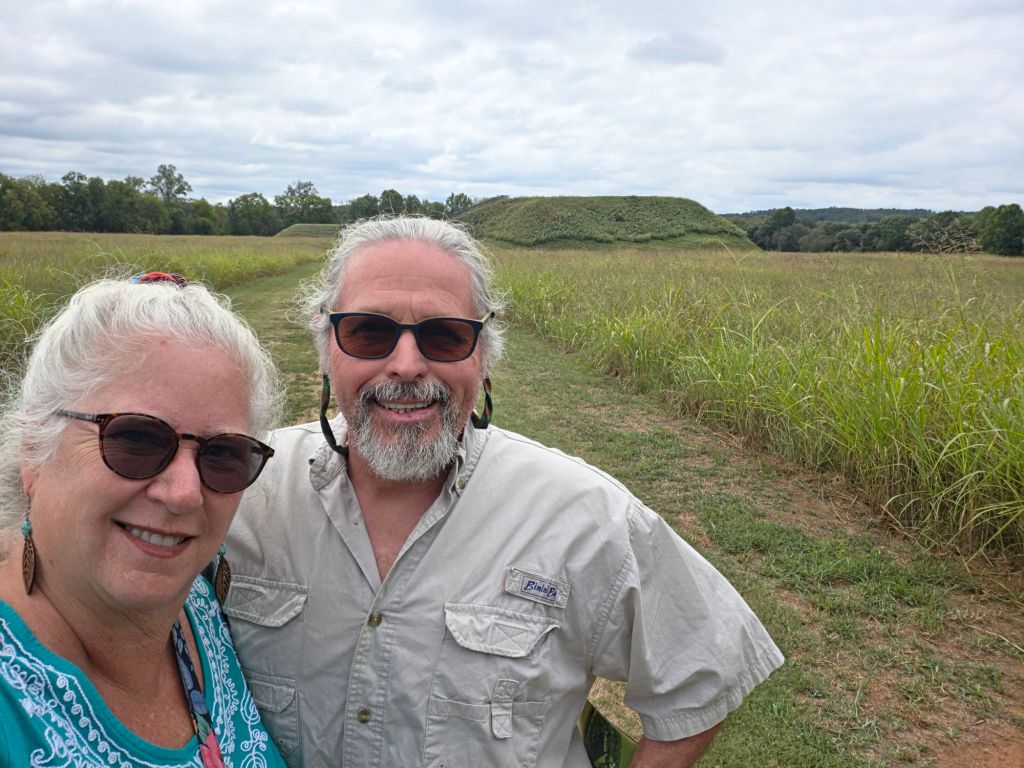
Somewhat reminiscent of the Hill Forts in England, Scotland and Ireland or the great mounds of the Incas, or the ceremonial mounds in South America- these earthen mounds were built by ancestors of the people who migrated over the land bridge during the ice age that connected the North American continent with what we know as Siberia.
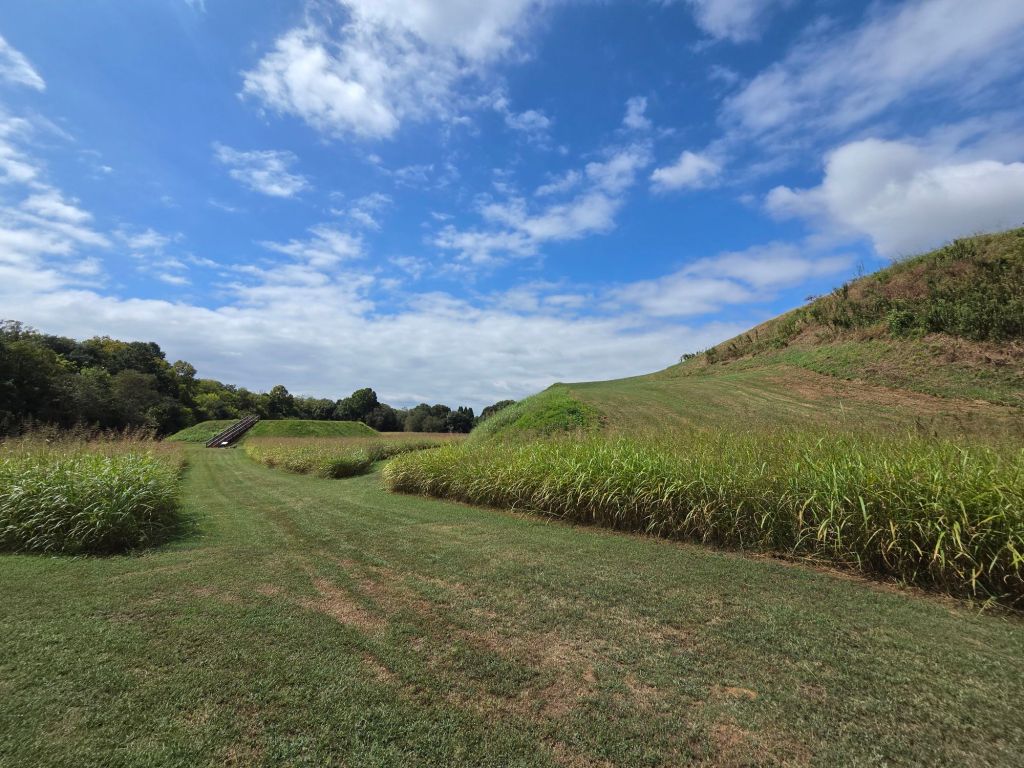
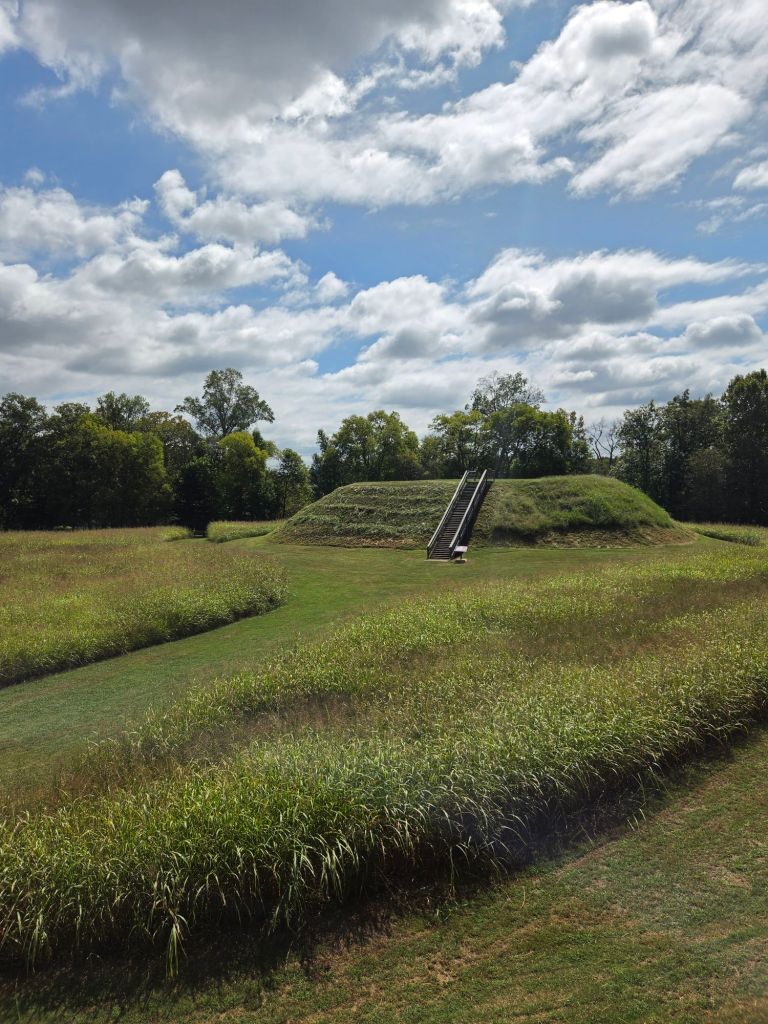
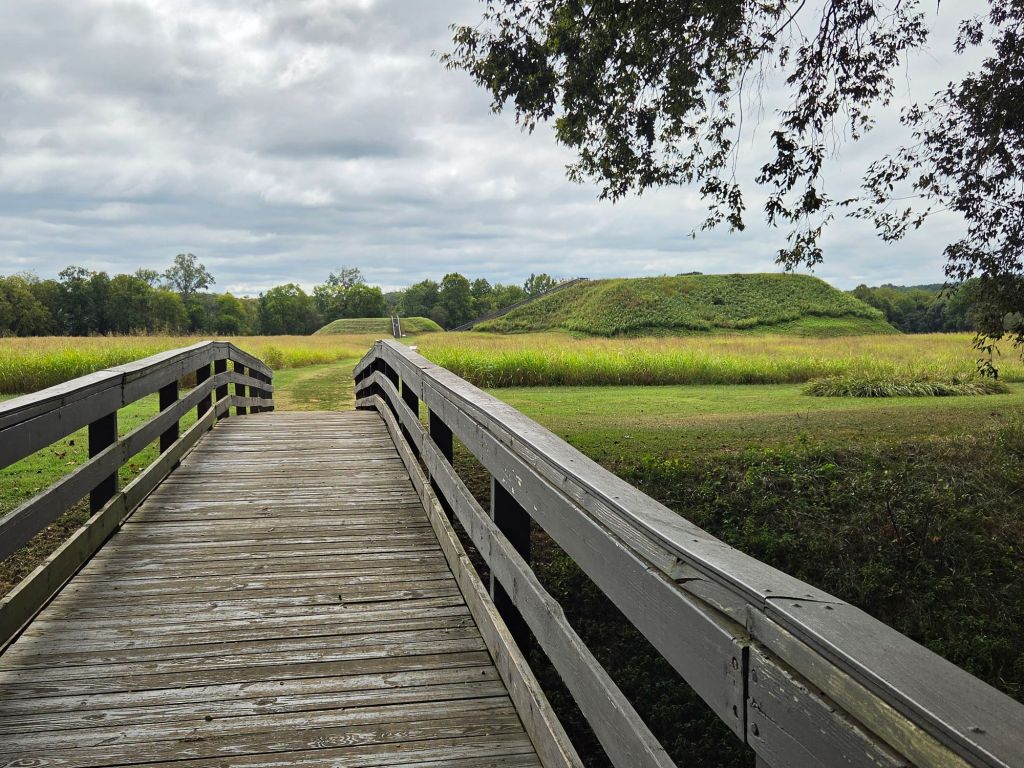
The earthen mounds of the Etowah were built during what is referred to as the ” Mississippian” Era of time between 1000 to 1520 CE when groups of people developed complex and interactive societies ruled by chiefdoms in the Mississippi Valley throughout the southeast.
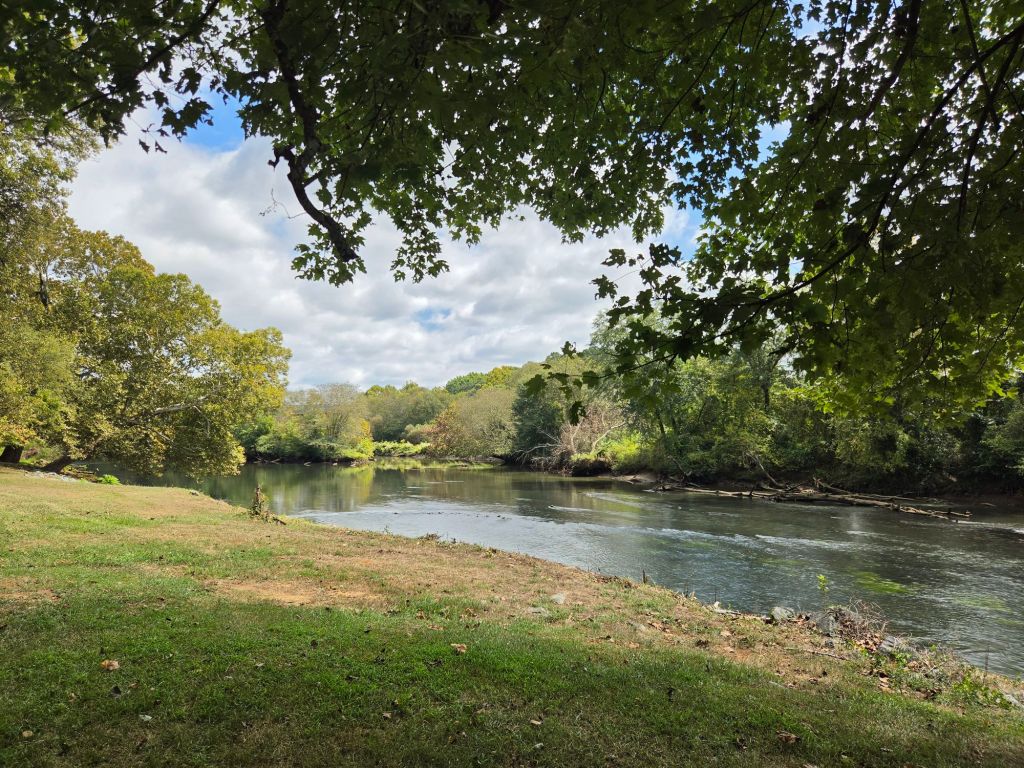
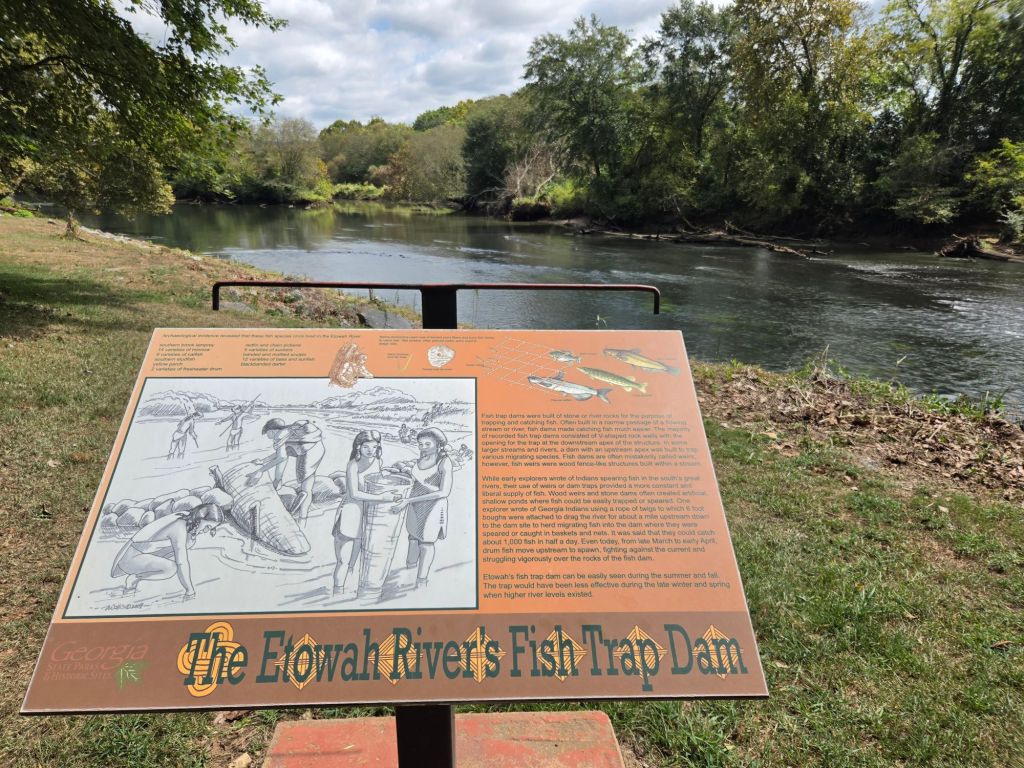
Tools and decorative arts from this period reflect a high level of craftsmanship. Corn was adopted as a central part of agriculture, and the surrounding environments provided opportunities to hunt game and gather resources like nuts and berries. The Etowah River, as it is aptly named today was an active source for fish and brought game in close to quench their thirst.
Today, in the river you can see regents of a V-shaped rock fish weir that park volunteers reconstruct to demonstrate how the people could narrow the fish coming downstream into a funnel making netting or spearing quite easy in the shallow rippling waters.
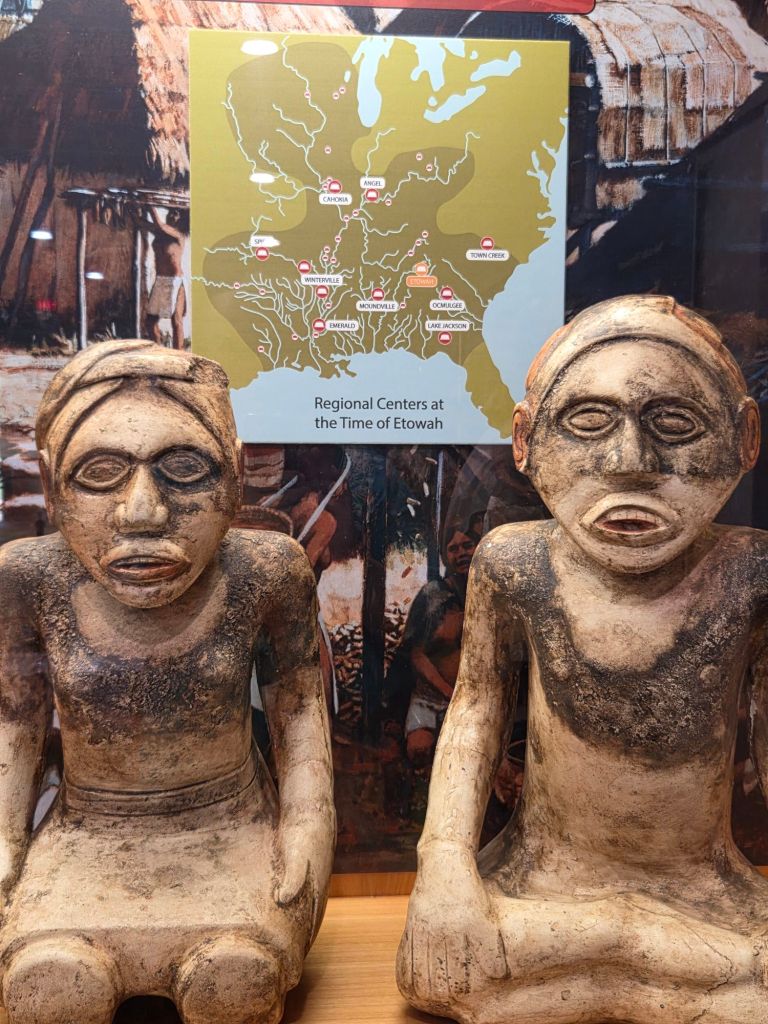
Thousands of artifacts have been found on the flat and mounded portions of this site which has been a state historical park since 1953. With the repatriation act of 2023 all the artifacts were returned to the Cherokee nation at their request. No actual artifacts are left in the visitor center.
Why you are asking the Cherokee? There is not a Etowah nation any longer. In 1830, during President Andrew Jacksons Indian Removal Act, the remaining Etowah peoples were forcibly removed from the Southeast to Indian Territory in present-day Oklahoma. However when this site was flourishing many tribes banded, traded, protected each other. That included the Cherokee, several other bands and the Muscogee (Creek) Nation which still maintain close ties with this site.
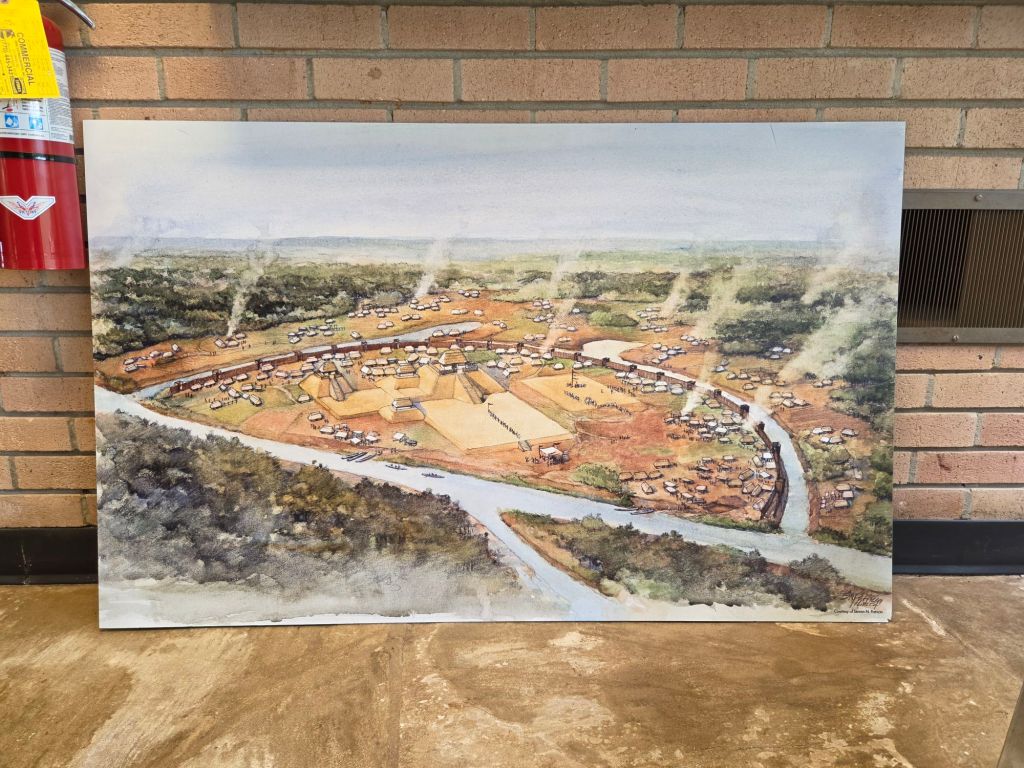
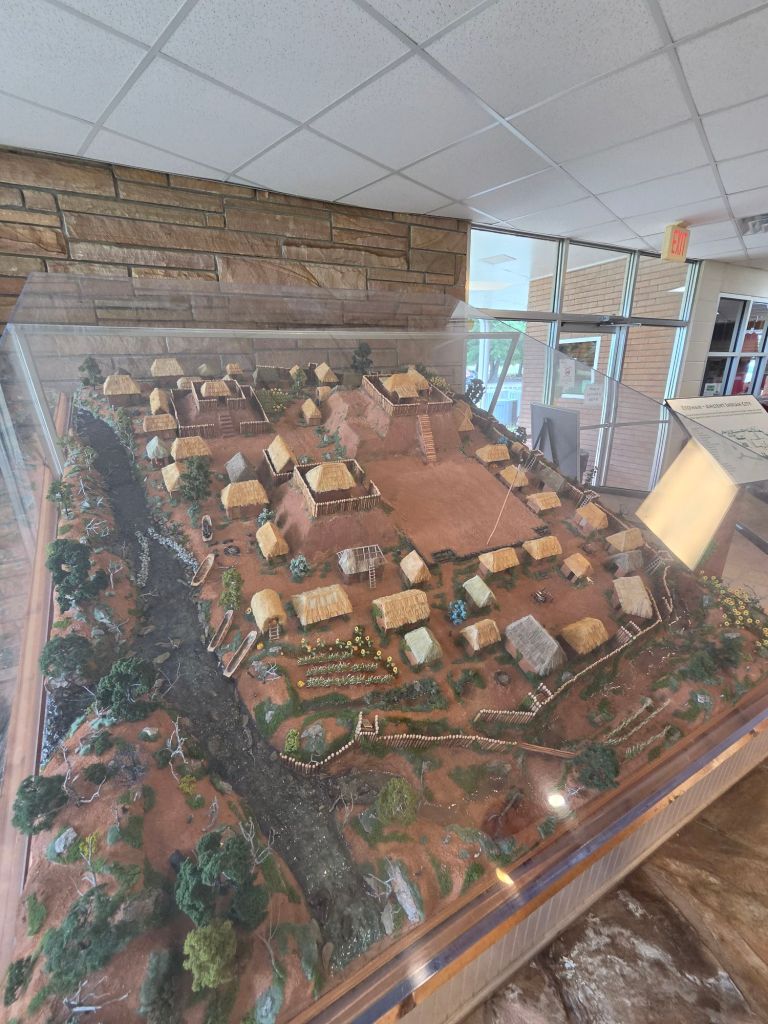
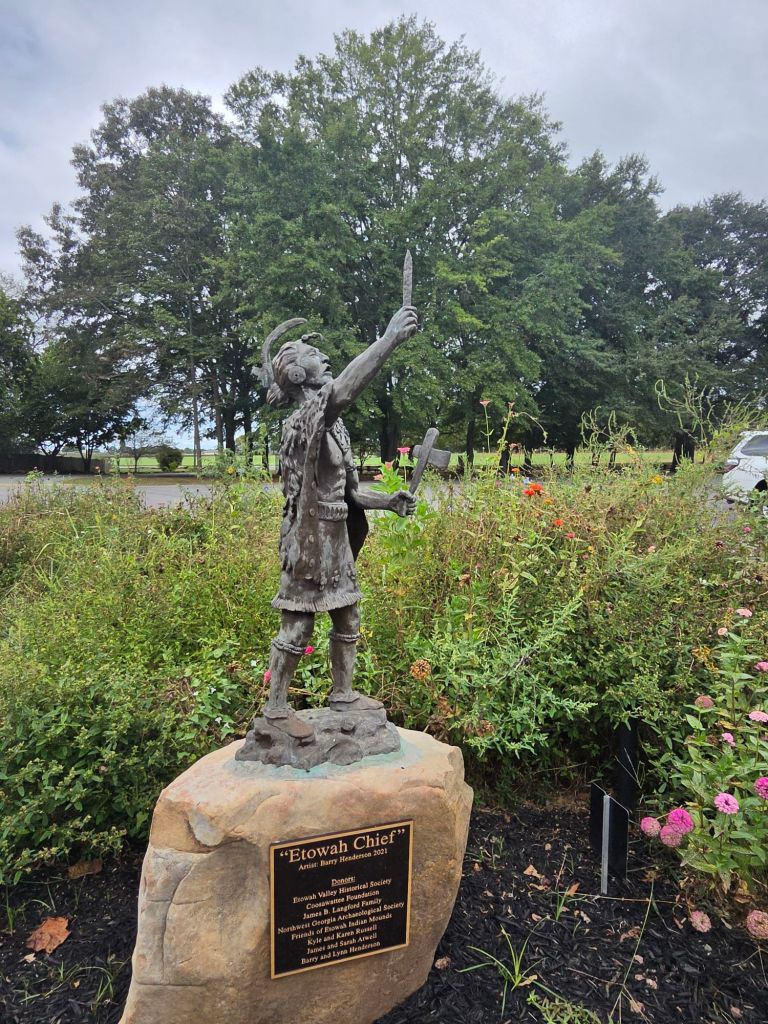
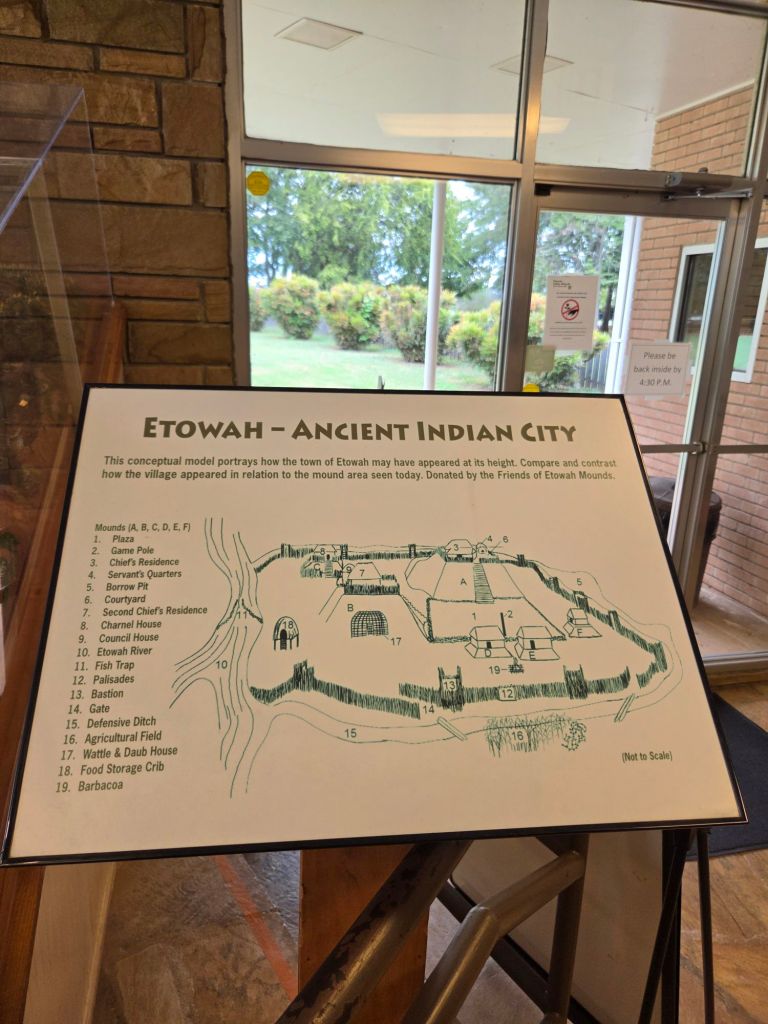
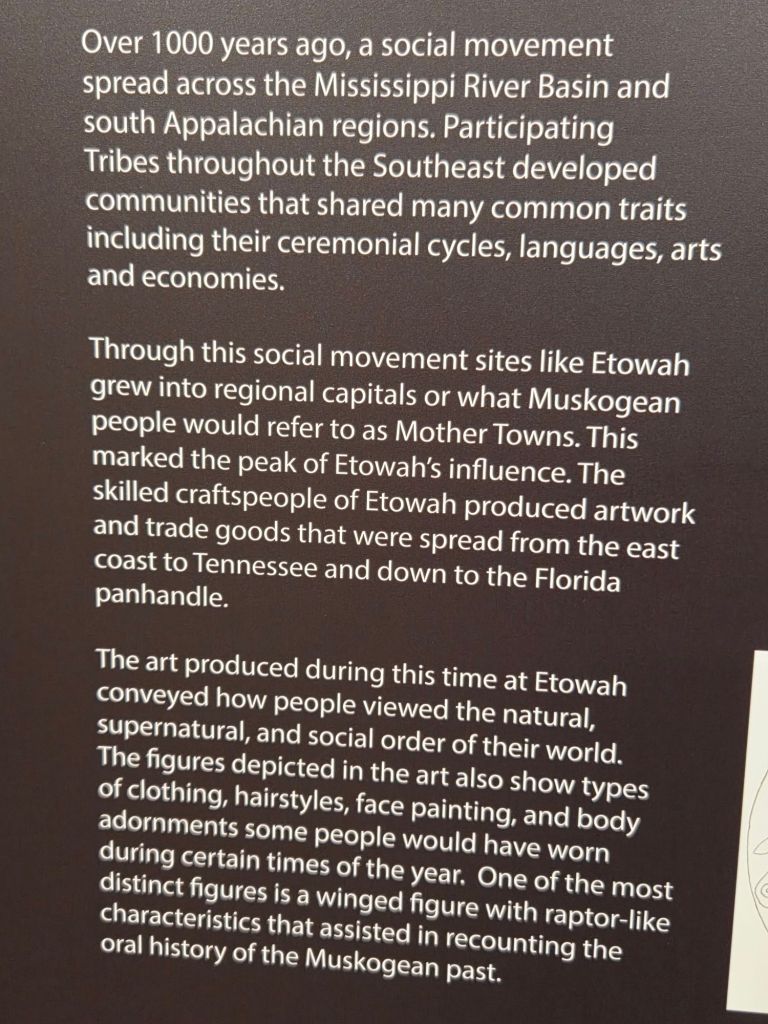
At its peak, according to material at the state historic site, several thousand people may have lived around this fortified town which served as the political, economic and religious center of the valley. The mounds you can still see and experience today are 2 of many.
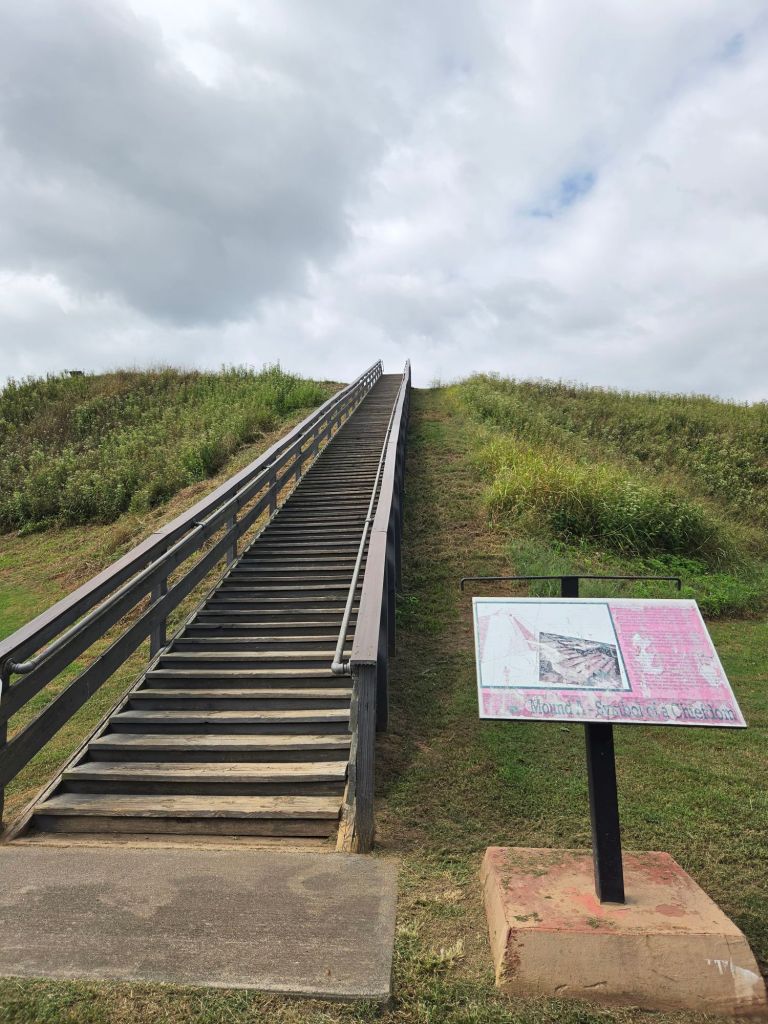
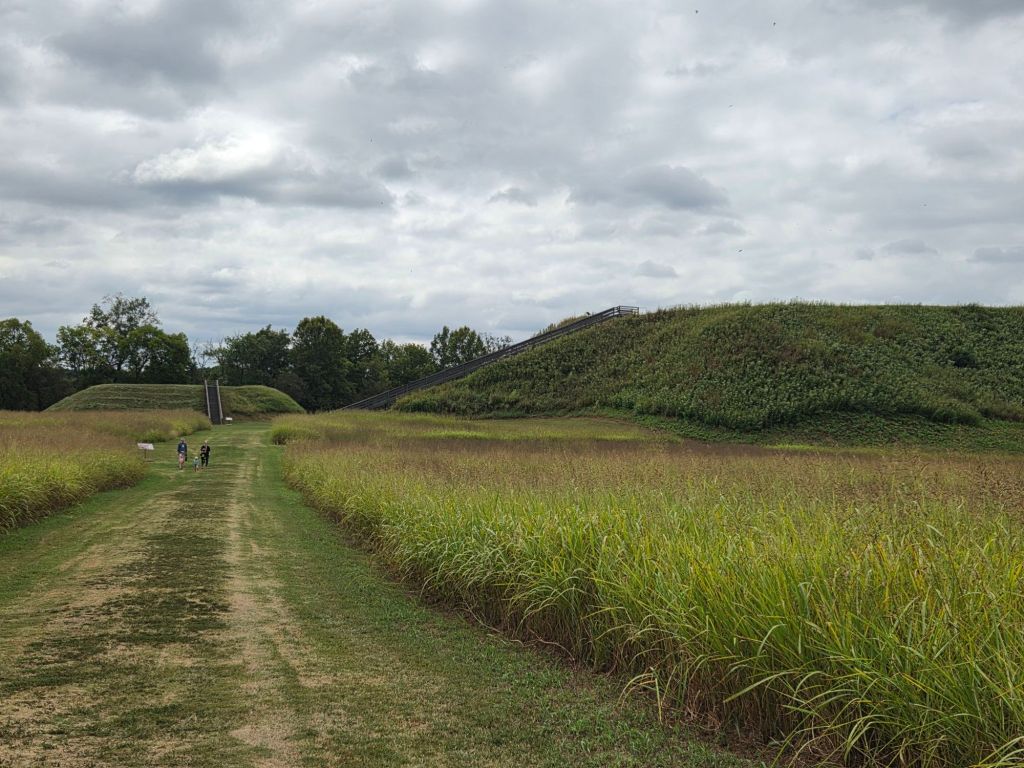
The largest, Mound A can be climbed up an easy wooden stairway. This is the largest at 63 ft high and highest and was the site of the chiefs home and where he presided over ceremonies. The one next to it, Mound B has evidence of a structure also being on top used for residential and ceremonial purposes. There are 5 mounds in total that have been determined to date by archeological digs. Ground penetrating sonar has also been used and it has been determined that a huge “plaza” lay directly in front of Mound A and that it originally was surrounded by a low rock wall and served as a community gathering place.
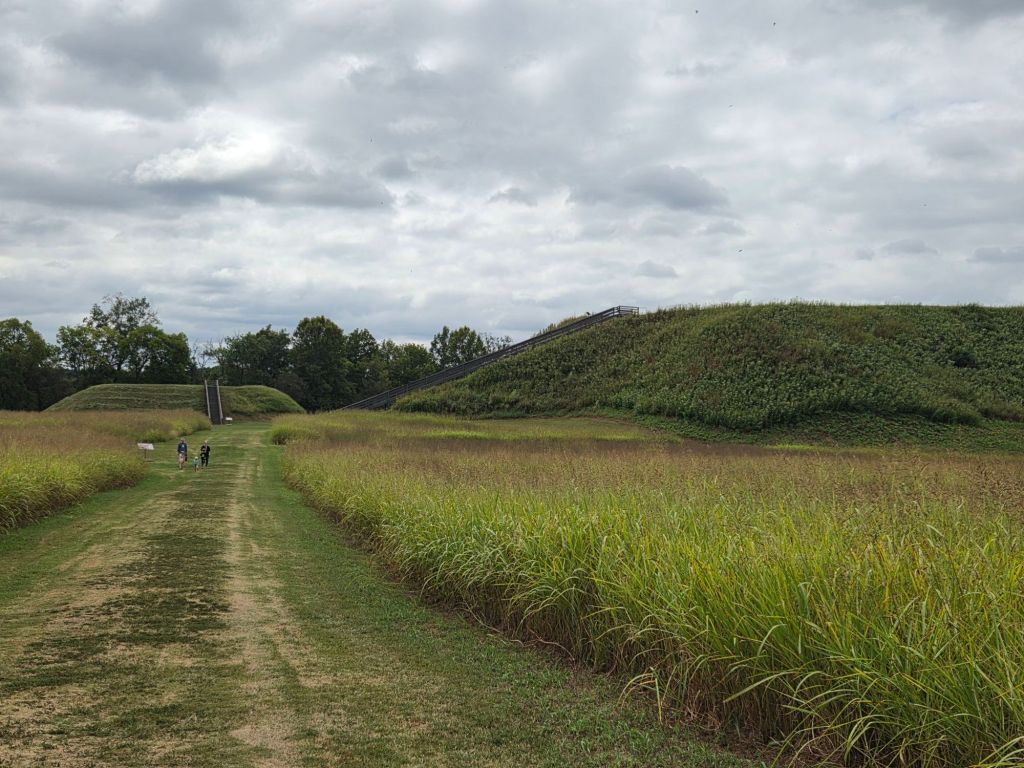
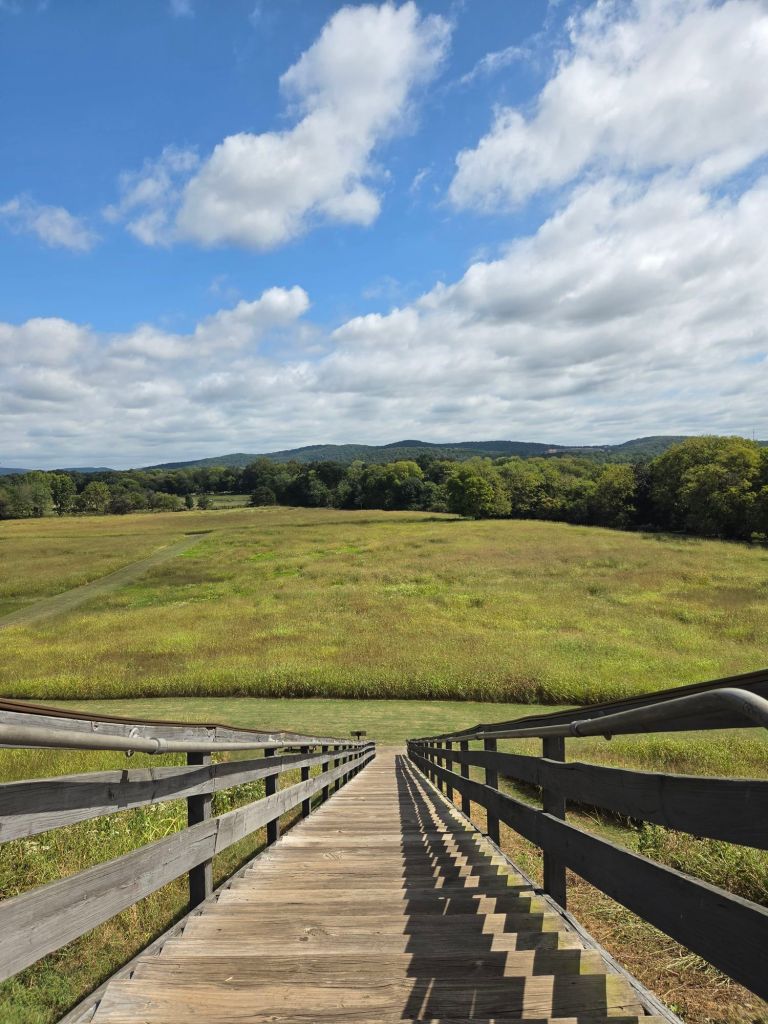
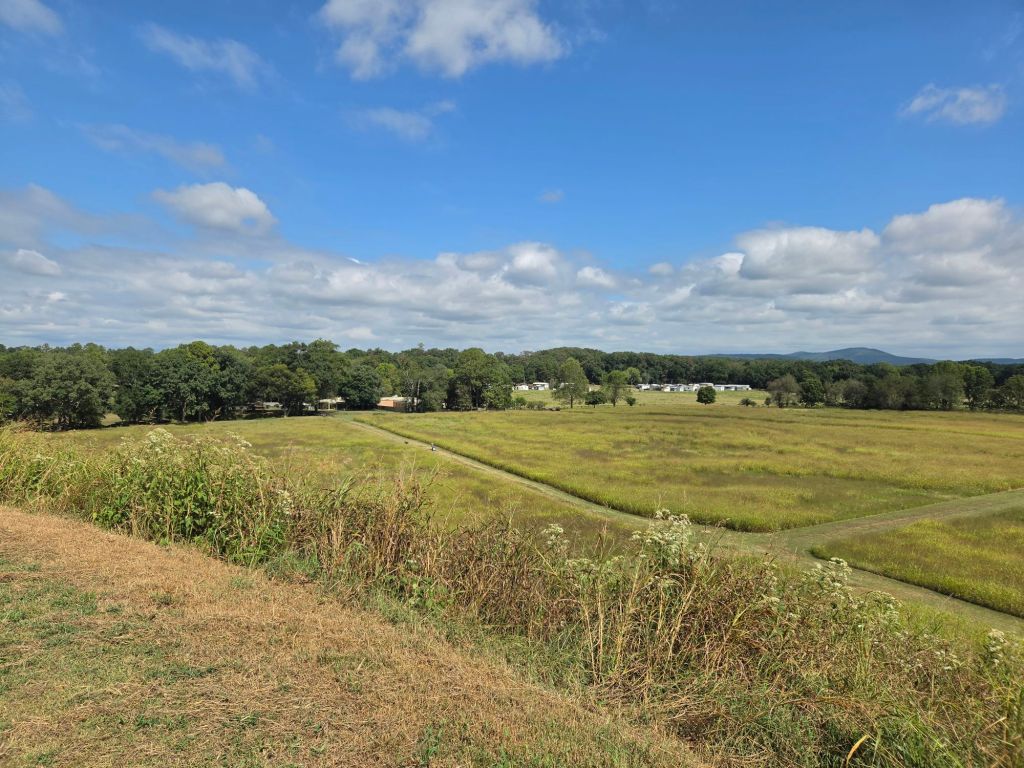
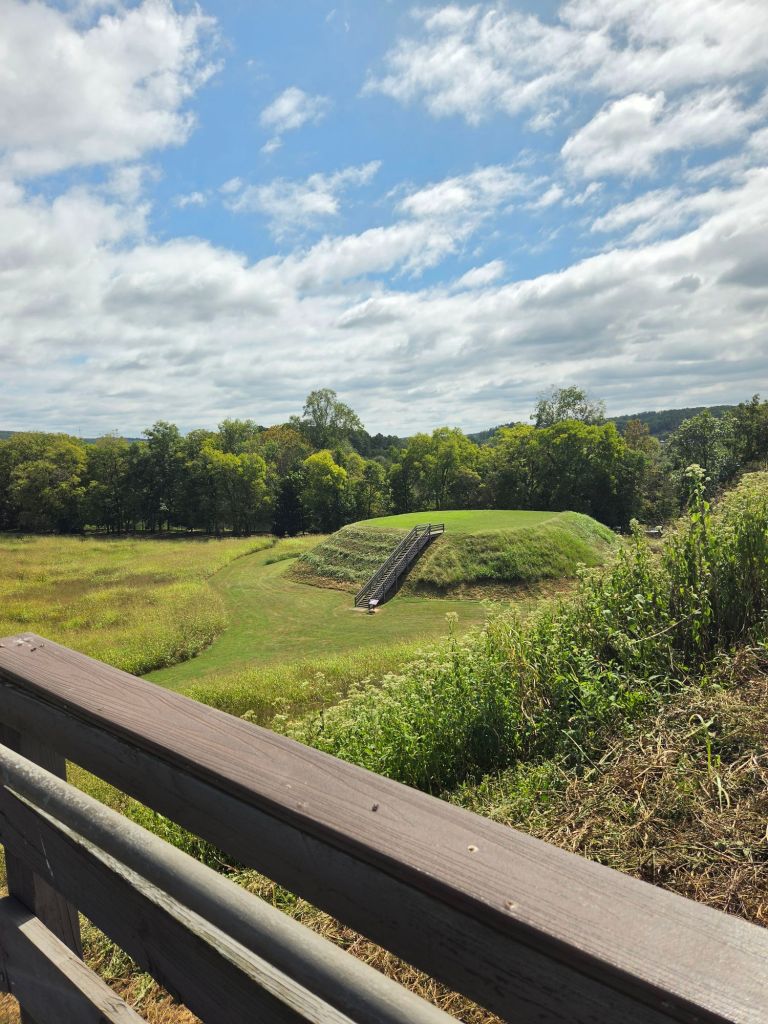
View of Mound B from atop Mound A.
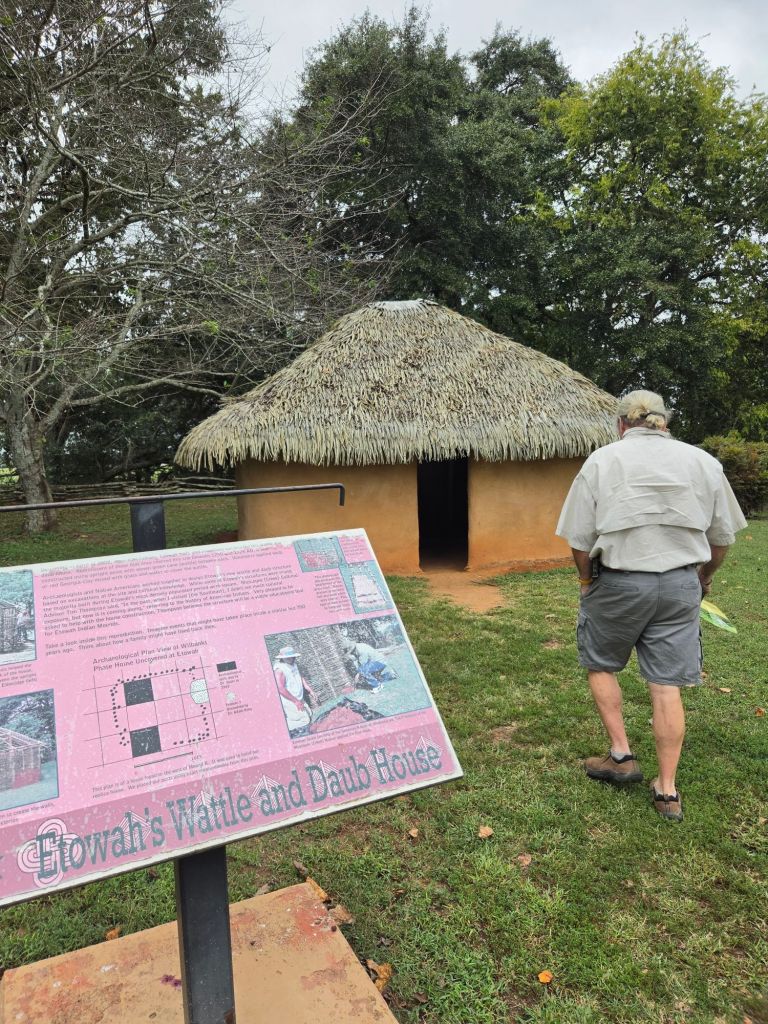
A replica “battle and daub” house is located at the entrance to the grounds from the visitor center. Based on archeological finds it is believed these are the types of structures that were used when the site was inhabited over its near 600 years of occupation.
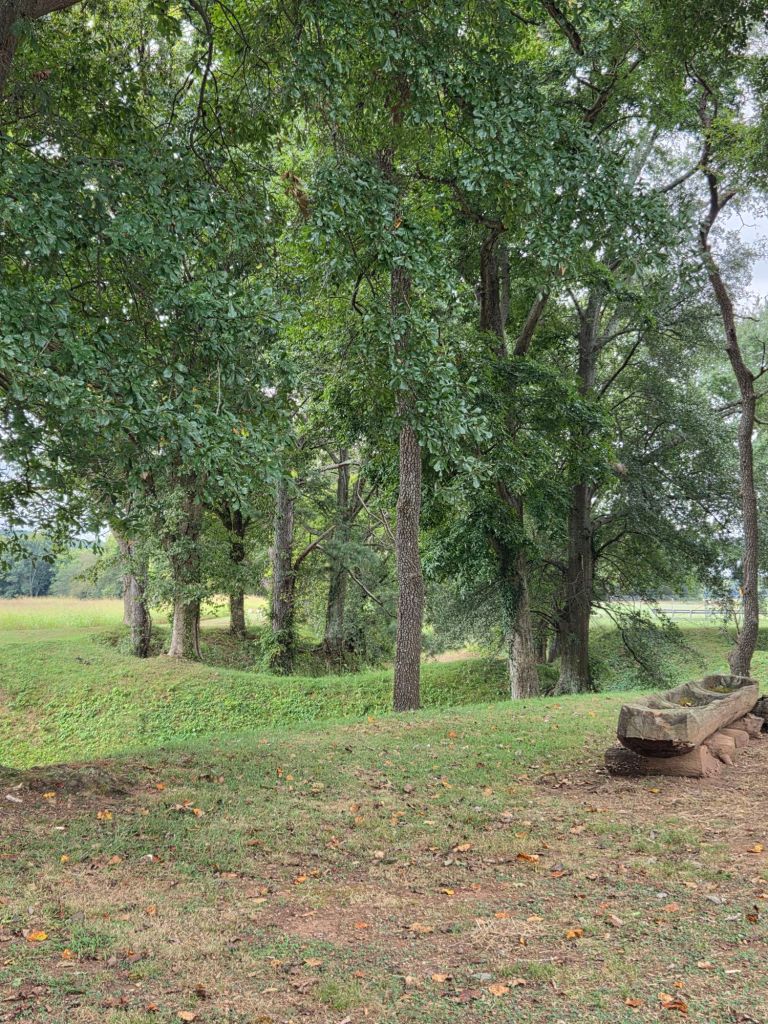
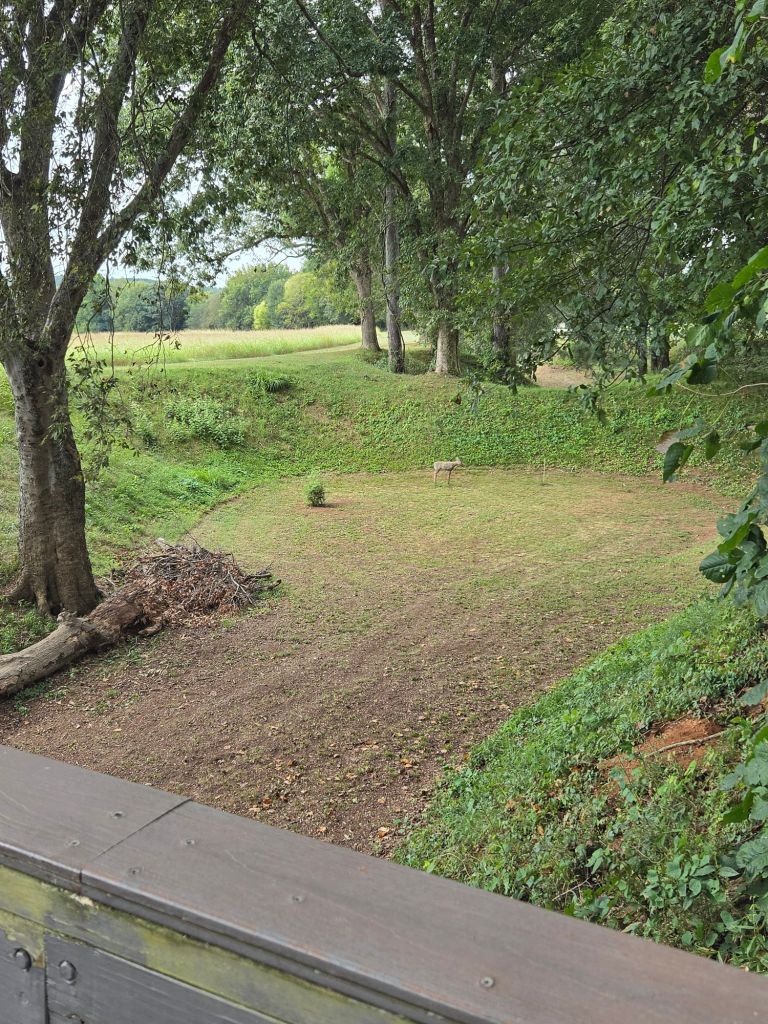
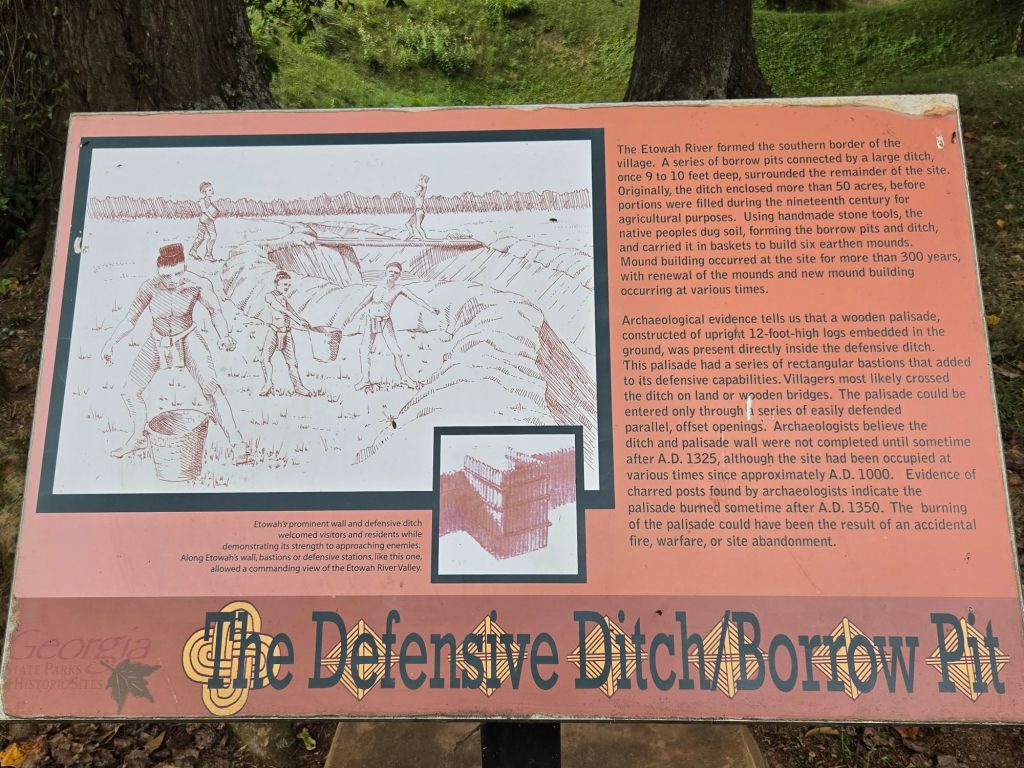
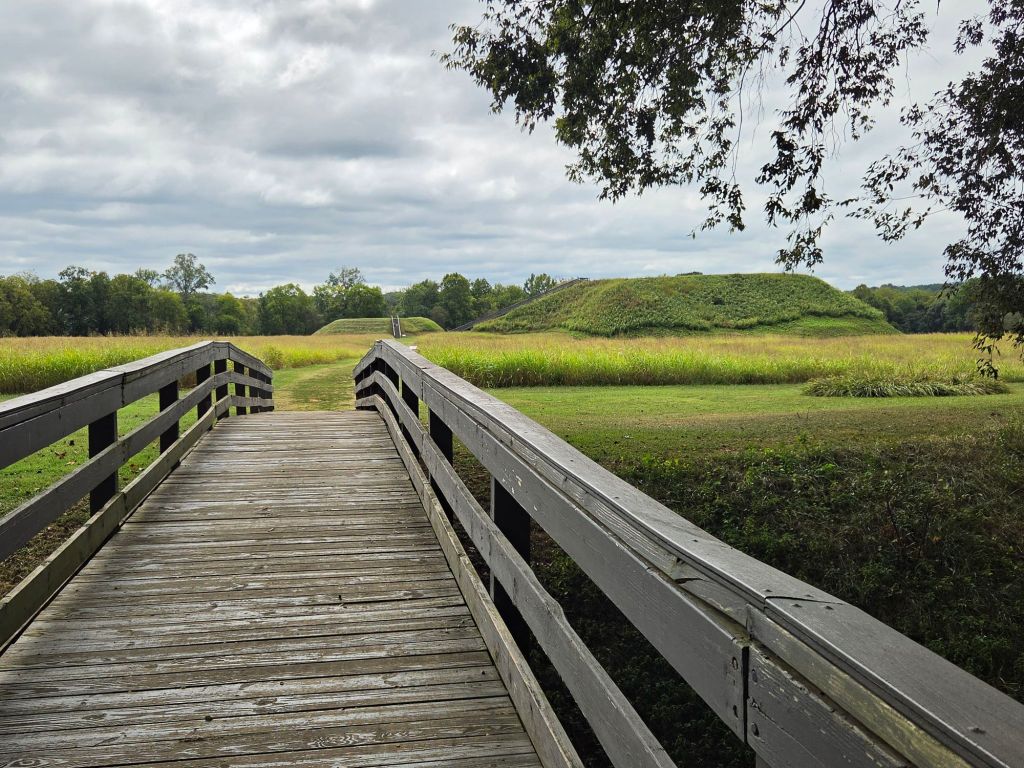
A “Borrow pit” and the “Defensive Ditch” are also evident. The borrow pit is two outs and the dry moat resulted from the removal of thousands of basket full of each that were used to build the mounds. This effort was repeated theough generations of the inhabitants to build, rebuild and fortify the mounds from wind, weather and natural deterioration.
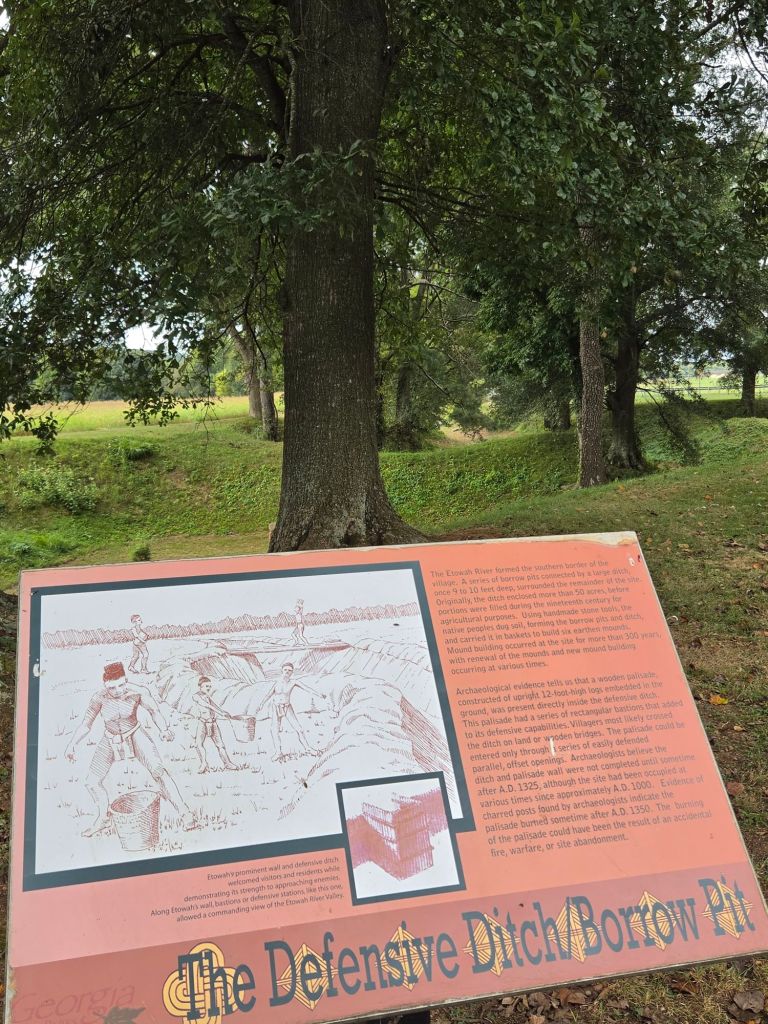
The Defensive Ditch was lined with a wall of logs and a ten foot deep stich which provided the first line of defense. The Ditch is quite evident in sections of the park today but no log wall remain or have been recreated.
It was uncanny to us how these mounds were so reminiscent of those we have only seen in documentaries about other people in other lands. There is another mound site in Georgia, further south and built by the Muscogee tribe. Information at this Etowah site notes that with the Spanish explorer Henry de Soto in 1539 that diseases introduced by the Europeans as well as land grabs forced the native Etowah peoples further south and eventually into the areas known now as Alabama before the Indian Act moved all indigenous peoples out of the southeast and into Oklahoma.
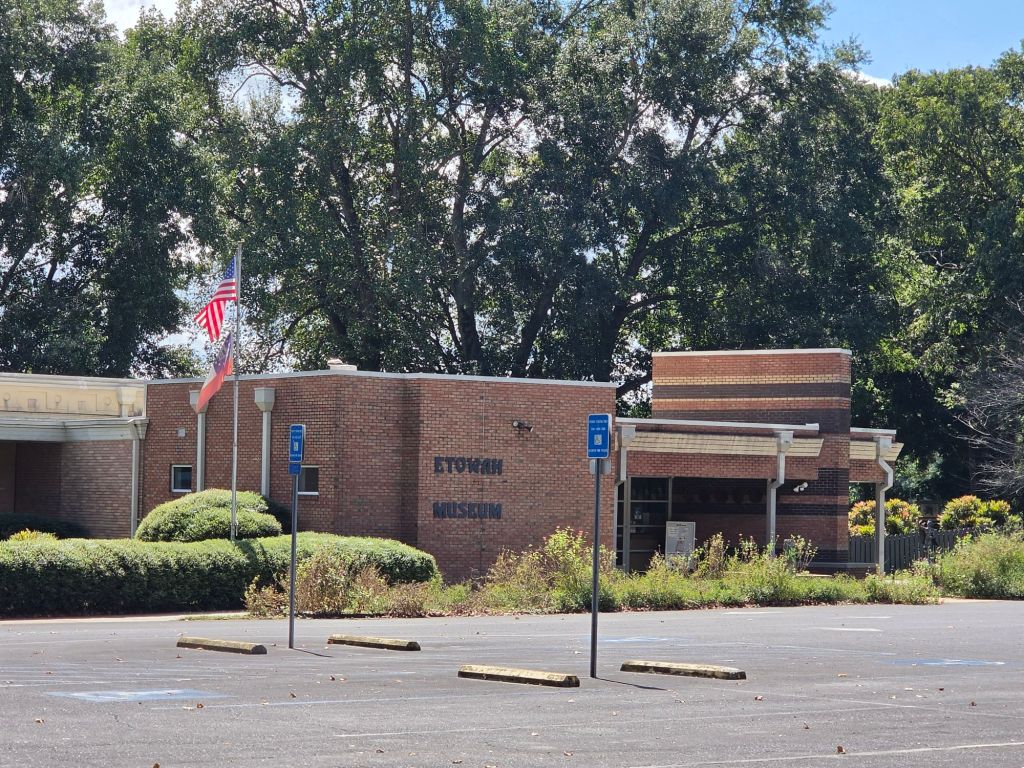
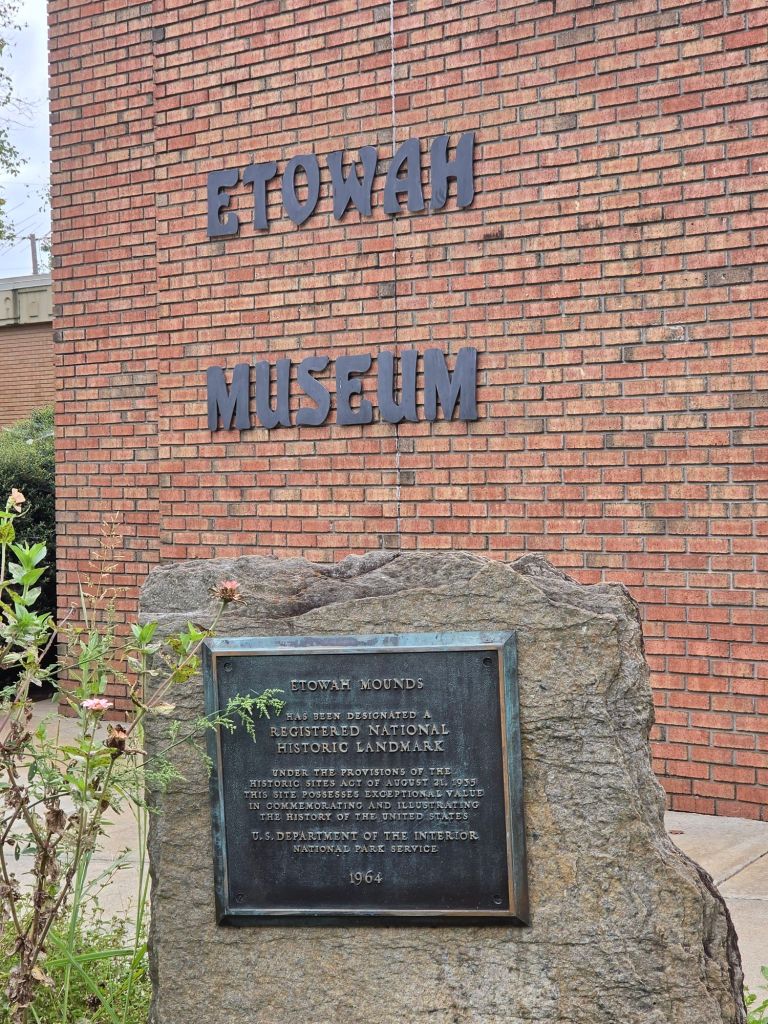
The visitor center does have a decent short film about the history of the site as well as a small gift shop and rest rooms. Admission is charged and for us Seniors it was $4.50 pp plus tax. Well worth the support. There is a large, flat, open parking area and we arrived on a Friday at about 10:30 to a near empty lot. If you come off the Interstate 75 with an RV just plan to arrive in the AM and parking should not be an issue. Be mindful that the road to the site is quite narrow and elevated with agricultural field ditches on both sides.
We hope you enjoyed this very unique historical find!
Kevin & Luise Sherman
Thepewterpalace.com


Leave a Reply