
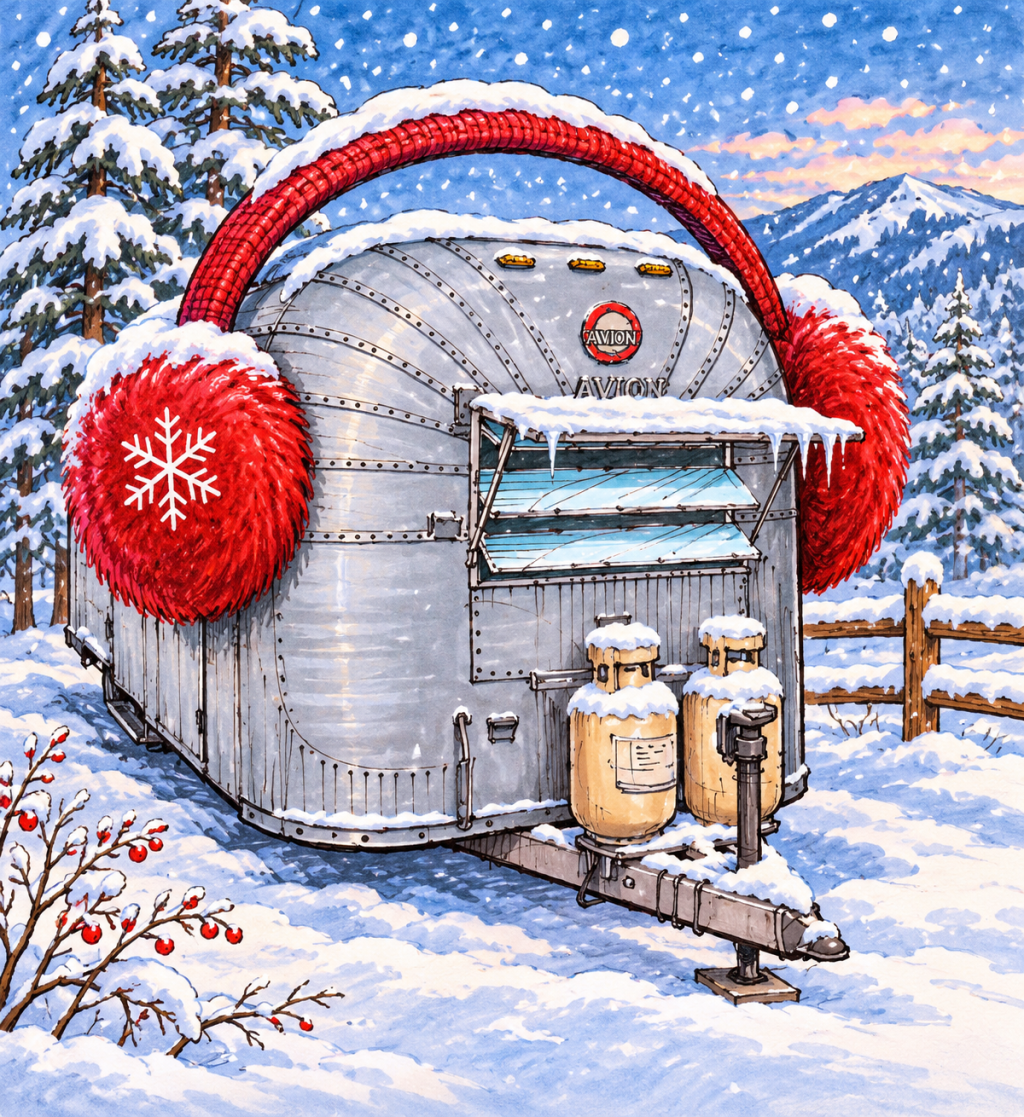
we know many, many of you are doing the dreaded ritual of having to winterize your rigs right now, or perhaps you already have done it(?). We feel your pain and did jthat for over 18 years with our Class A motorhome and then our two Avions until 2023.
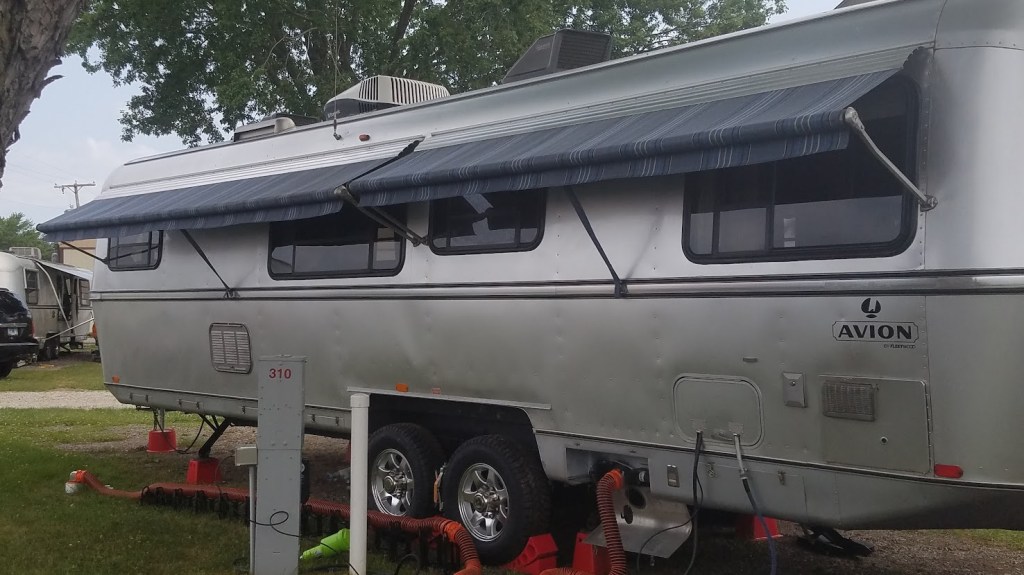
Here our our top 15 tips for winterizing and protecting your “Avion Asset” for winter storage.

Here are the basic steps we have done- both inside and out.
- Shut off ByPass to the Hot Water Heater. Lift up the “blow off valve” and get a 5-gal pail and put underneath and unscrew the plug and let hot water heater completely drain out.
- blow out the water lines: Go to the city water and using an air chuck threaded for the water line hook that up. Use an, oil-less portable air compressor to blow all the water out of the lines. Kevin set’s it at 30lbs of pressure to blow out the water from all the lines.
- Drain all holding tanks well.
- Open all faucets and low point drains and keep them open Push the pedal and the spray nozzle in the toilet, and also shower head to be sure all water is drained out completely. If you are worried about varmints getting up your low point drain tube then wrap the end with screening should help.
- Pour RV (pink) antifreeze into toilet bowl , and all other drains including the shower, kitchen and bath sinks- this will protect your holding tanks and pipes. then be sure to pour at least a few inches of antifreeze into the toilet bowl when closed and check the bowl for evaporation over the winter as you want that liquid to be in the bowl to keep the “trap door” seals moist.
- Outside, Kevin gets is 2 foot extension for the sewer line and his yucky 5-gal pail and he pulls the black line let it drain out any remaining. Shut and then do grey water whatever may be remaining. Take this and dump it.
- We Put on a “winter cap” on to the sewer hose connect opening and leave your wet bay door open. (HOW TO MAKE A WINTER CAP= he has drilled a few small holes in an old spare sewer hose cap this provides for ventilation but small enough that no critters can get in). It is suggested to spray the black and grey sewer valves with Boeshield t-9 and push in and out a few times to lubricate. We keep our valves out and open to allow air flow. Our tanks don’t stink at this point! (also as side note, we highly recommend Liquified Black Tank Treatment )
- LED lights deter varmints: we lay some LED warm white rope lights on under our rig to keep on 24/7. We also continue to do this when camping at least 3 nights anywhere and especially when we are doing a longer stay anywhere. This has been working for us for over 10 years now. ADDITIONALLY, we also have a pair of motion sensor flood lights that work terrifically during winter storage and also now, full timing. they are portable, quick to set up and we use Rechargeable batteries in them. with them pointed underneath the trailer at the front tongue and then the back bumper, any critter who tries to walk underneath will be hit with bright lights making them feel like they are on a big bright stage! they don’t like that!
MOVING INSIDE:
here are some basic steps:
- Remove all liquid products (again, our garage was great and secure but NOT heated!) from under the kitchen sink, bathroom sink and also the bathroom closet. Use them over the winter at home or place in storage closet at home where they can hibernate too till spring!
- Remove all food stuffs, spices and anything remotely food like from the rig. Anything that could even remotely explode with freezing temps, or whose scent might be attractive to starving varmints.
- Wipe down the inside of the refrigerator AND freezer area with a mild cleanser that includeS either bleach or at least an antibacterial cleaning solution to ensure you have a squeaky clean fridge. Use some sort of block/holder to keep the doors open for the winter storage time. Do not let them close! Pool noodles work well. We already had one of the hard plastic ones from Camping World so use that. I actually think the pool noodles are better, that hard plastic thing is easy to knock out by accident!
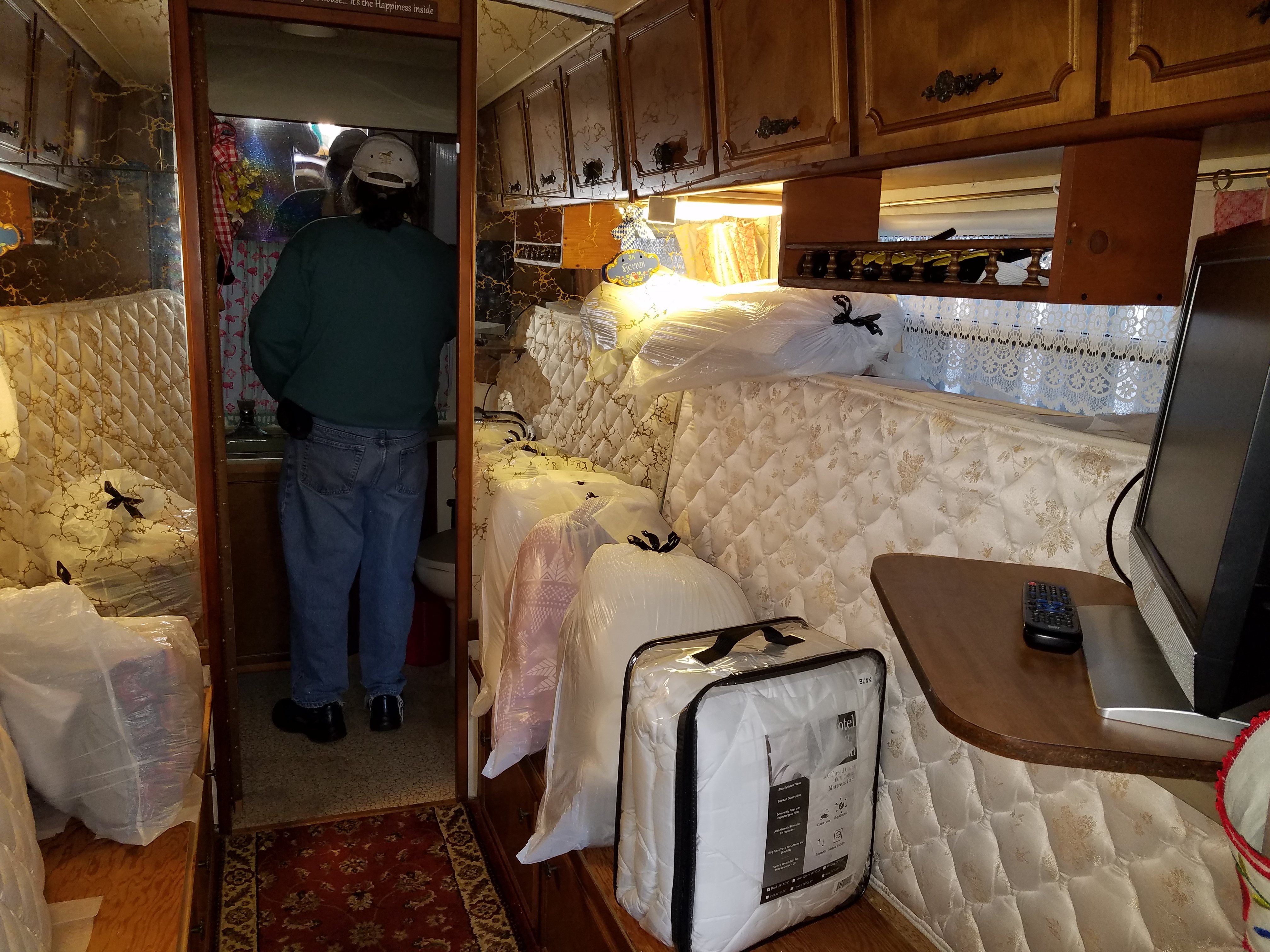
- Strip beds, clean all bed linens and place all sheets and blankets from beds into scented trash bags (we use gLAD BRAND Febreeze scented lavender) draw string kitchen trash bags and label if needed. If you have storage room, bring them home and store in a safe, dry place.
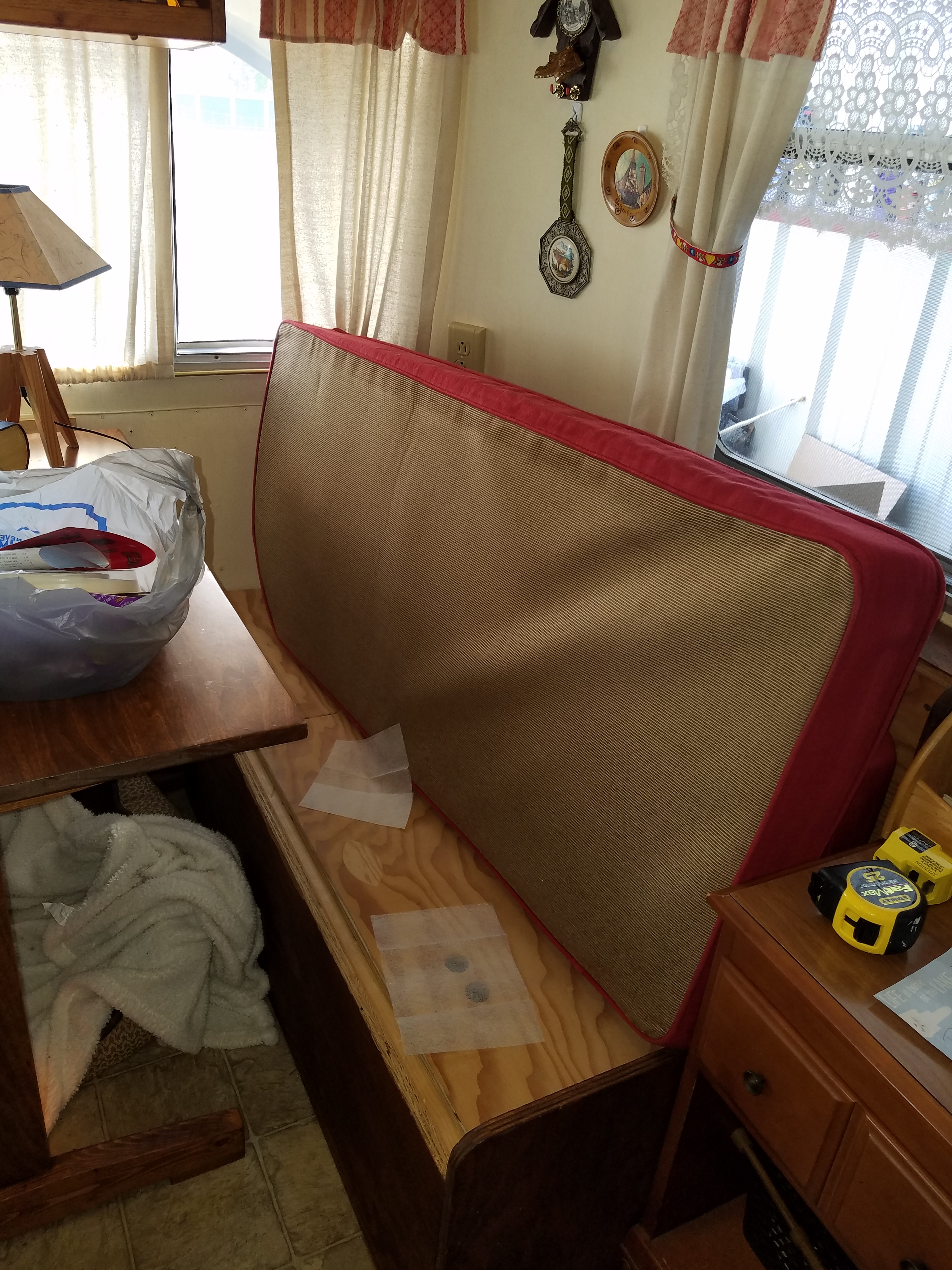
- Lift bed mattresses and dinette seat cushions up on their side to allow air flow in and around them thereby reducing chances of any mold and also critters getting more room to hibernate in darkness. We store the scented bagged linens on wood part of bunks next to the mattresses.
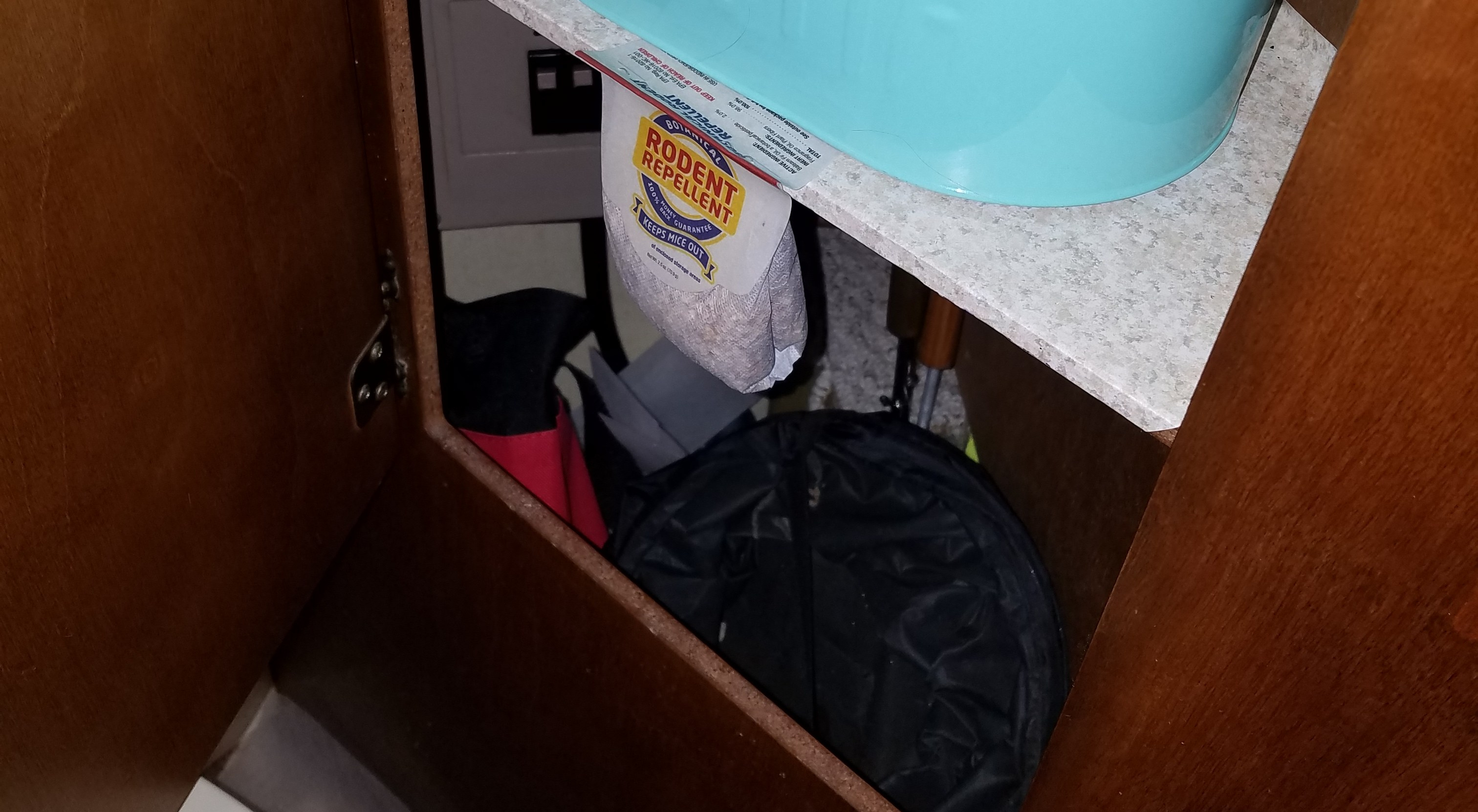
- use Mouse Deterrents: we use a combination of original scent Bounce fabric sheets AND FreshCab Mouse Deterrent Herbal Sachets. Bounce gets placed on every shelf, inside every cabinet, under the beds and in closets (yes, we leave some clothing in closets too!) Spiders and ants do not like Bounce either! FreshCab sachets are placed along floor edges, under the bed and sofa, behind drawers and onto the floor in the back floor of all cabinets. WHY?? mice like dark and then love to run along edges of walls and cabinets the most. We also will put bounce and freshCab in the exterior outside compartments, storage, water heater, furnace and refrigerator—IMPORTANT—just do nOT forget to remove them in the spring before you start camping again!
CHECK OUT OUR “how to” VIDEO COLLECTION ON WINTERIZING (YouTube playlist)
NOTE: We do not use any snatch & kill traps because the whole idea is that we do not want them even coming in…(I do not want a rotting dead mouse inside over 5 months!) We DO have some of those black box traps for mice and rats on the cement floor in the garage with poison in them. We have seen evidence of some nibbles eating the poison but no dead carcasses in the traps themselves- I guess word has spread that our “restaurant” served bad food! LOL
15. BE SQUEAKY CLEAN INSIDE! Last but not least, give your rig a really good vacuuming and wipe down all counter tops, sinks, refrigerator, stove top (lift top and vacumn/wipe our any crumbs!) table tops, bath fixtures etc. I highly recommend using Clorox Cleaning Cloths or similar with bleach/antibacterial wipes.
BONUS! Some questions people have asked us…
Do you keep your “camping wardrobe” in the closets? We did but again, there are Bounce sheets in all closet floors and shelves. We also stored smaller clothing items in plastic snap lid bins all the time above our bunks. I put Bounce sheets tucked in between totes and on lids here too.
Do you keep your pots and pans, cookie sheets, and silverware onboard in winter? Yes, and we have always done this with no problem. Obviously in spring if we see any sign of mouse droppings or nesting, then everything will get a full sterilization in our dishwasher at home, but otherwise just a good wipe down does the trick each spring.
Do we keep toilet paper and paper towels under RV sink cabinets. NO! we do not. These items provide a huge attraction to varmints looking for nesting and bedding materials. We take those paper products out and use them up over winter in your home.
Do we close our blinds and curtains. NO we did not! because our avion was in a garage. In fact, if you have the day/night pull down fabric type shades your manufacturer may caution you not to do keep them down all the time. It releases the factory pleating too much. But we kept our curtains open during winter too. Because our garage is dark, there is also no need for us to shelter our interior cushions, and linens from sunlight by having our curtains closed. Mice love darkness best of all!
How important is it to have your tires up on board or something and not in contact with the cold driveway or dirt? VERY! For the best life and safety of your tires, please drive up on at least 1-2 inch thick boards. We actually drove our rig up on those heavy industrial rubber mats that can be purchased at Lowes or HD. They have holes in them, which allows for ventilation but also as Kevin notes, rubber to rubber is the best of all worlds. You can see a little of the black mat in our video clip above. We also keep these mats down all year because they made a great way for us to know exactly where the RV rear should be when backing in the trailer after a trip. No guess work for spotter luise!
One caveat to all we have listed above is that IF you have no choice but to store your RV outdoors, exposed to the elements, and ESPECIALLY on grass or in a field, then extra precautions may need to be taken to remove more from the interior than we needed to do with our RV garaged. However, much of the winterization steps, even the exterior Rechargeable motion lights sure will be a big help when you greet your silver beauty again in the spring. We do NOT recommend covering your Avion, covers move with wind and storms and can mar the anodized finish forever. Also, uncovered allows you to check on the exterior and interior a lot easier, sweep snow off the roof, check for leaks, etc. and moisture does not get trapped inside causing unwanted mold and mildew.
We sincerely hope this article has helped you with your winterizing chores! Let us know in the comments please! this also helps others find the article easier!
Safe Journeys from Kevin, Luise & Nutmeg!




Leave a Reply